

Copyright 2026. All rights reserved | aina-landscaping.com | Design | Mowing | Irrigation | Fertilize | Trimming & Pruning | Turf Installation | Flowerbeds | Tree Care | Clean-Up | Topsoil & Aggregate | Commercial Services
Our Kona region on the Big Island is known for its unique landscape, volcanic soils, and sunny tropical climate. However, we also live in a place where wildfires can be a major threat to homes and businesses, especially during the dry season.
Dry grass, invasive species, and improper or unmaintained landscaping all increase fire risk, making it vital for home and business owners to make active efforts to defend their property and loved ones.
In this article, we’ll explore the essentials of firewise landscaping, concentrating on practical, local strategies to create defensible space around your Kona home, and answer some common questions at the end.
Why Firewise Landscaping Matters in Kona
As we all know, wildfires in Hawaii have become more frequent and severe in recent years, particularly in dry lava zones like the ones we have in Kona. The dry grass, trade winds, and steep terrain can turn a small spark into a fast-moving blaze.
Therefore, it’s in everyone’s best interest to implement firewise landscaping to lower the risk of structure loss, make it easier for firefighters to do their jobs, and increase our community’s resilience.
What is Defensible Space?
Defensible space is a buffer zone between your home or commercial building and the surrounding landscape. It’s designed to intentionally slow or stop the spread of wildfire and provide a safe area for firefighters to operate. In Kona, creating defensible space includes several essential practices:
Create a 5-Foot Gravel-and-Stone Border
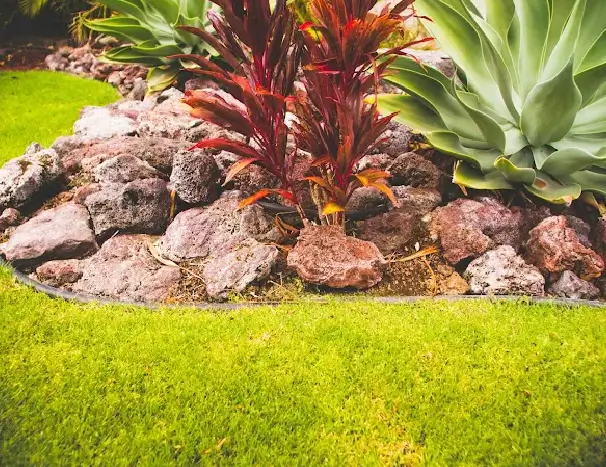
One of the most effective firewise strategies is to create a five-foot non-combustible buffer around your house or building. This border should be composed of gravel, stone, or other hardscape materials that won’t catch fire. Therefore, you avoid using mulch, wood chips, or other organic materials that can ignite from embers.
Benefits of a Non-Combustible Border:
- Prevents burning debris from reaching your home or business
- Reduces the risk of embers igniting nearby plants or materials
- Serves as a clear line of defense for firefighters
Trim Trees and Landscaping Away from Roofs
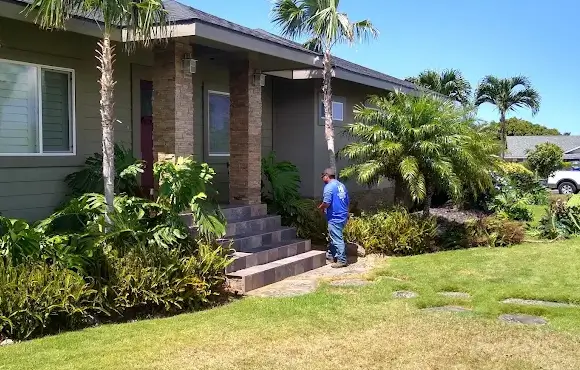
Overhanging branches, unkempt shrubs, and overgrown landscaping increase the likelihood of fire spreading to a home or business structure. Routinely trim trees and large shrubs so that no limbs are within 10 feet of the roof or chimney. Prune lower branches to prevent fire from climbing from the ground into the tree canopy—a process known as “ladder fuels.”
Tips for Pruning and Maintenance:
- Remove dead or dying branches
- Space trees and shrubs to prevent fire from jumping between plants
- Keep gutters clean and free of leaves
Remove Dry Grass and Dead Vegetation
Dry grass is a major fire hazard in Kona. Routine mowing, weed whacking, and removal of dead plant material are necessary for reducing fire risk. Focus on keeping grass and weeds short (less than four inches high) and removing piles of leaves, branches, or trimmings from your property.
Plan Firewise Plantings
Choose fire-resistant tropical plants native to Hawaii or adapted to the local climate. These plants have higher moisture content and are less likely to ignite. Group them in well-spaced beds, and use rock or gravel as groundcover between them to break up potential fuel sources.
Examples of Firewise Plants for Kona:
- Naupaka (Scaevola spp.)
- Ti plant (Cordyline fruticosa)
- Hō‘awa (Pittosporum hosmeri)
Maintain Access and Water Supply
Keep driveways and access roads clear and wide enough for emergency vehicles. If possible, ensure you have an accessible water source such as a pool, pond, or rainwater tank, and that your hoses are long enough to reach all areas of your property.
Hawaii Firewise Landscaping Checklist
Here’s a quick checklist you can use to make your property more firewise:
- Is there a 5-foot gravel or stone border around all structures?
- Are trees and large shrubs trimmed at least 10 feet from roofs and chimneys?
- Is dry grass routinely mowed and dead vegetation removed?
- Are gutters and roofs free of debris?
- Are firewise plants used in landscaping?
- Is property access clear for emergency vehicles?
- Is an outdoor water source available and accessible?
Need Help? Aina Landscaping is Prepared to Assist
As part of Wildfire Awareness Month, our Aina Landscaping services are ideal for helping Kona homeowners and business property owners create defensible spaces. We offer:
- Firebreak clearing
- Dry grass removal
- Non-combustible hardscape installation
- Firewise planting and maintenance
Our team at Aina Landscaping understands the challenges of the Big Island’s environment, and we bring local expertise to every project. By taking the recommended actions today, you can make your property safer. Firewise landscaping isn’t just about compliance—it’s about protecting people, property, and the beautiful island we all call home.
Frequently Asked Questions
How often should I trim trees and remove dry grass?
In Kona’s dry climate, it’s best to check your property monthly, especially during wildfire season. Regular maintenance prevents the build-up of fire-prone materials.
What materials are best for a non-combustible border?
Gravel, stone, volcanic rock, and concrete pavers are all smart choices. Avoid wood mulch or bark near your home or business.
Will creating defensible space make my property less attractive?
Firewise landscaping can be beautiful and safe. Native plants, rock features, and well-designed hardscapes add curb appeal while protecting your property.
Can I do this work myself, or should I hire a professional?
Many homeowners choose to handle basic tasks, like mowing grass and trimming trees. For more demanding projects—such as installing hardscape or designing plantings—a professional can help your property meet higher safety standards.
Where can I find more resources about firewise landscaping in Hawaii?
The Hawaii Wildfire Management Organization (https://www.hawaiiwildfire.org/) offers guides, checklists, and community programs to increase your awareness and help you get started.


