

Pollinator-Friendly Landscaping for the Big Island

Inviting the Birds and the Bees

On Hawaii Island (the Big Island), pollinator-friendly landscaping is more than a gardening trend; it’s an indispensable step in protecting our native species, supporting food crops, and preserving the island’s unique biodiversity.

With June being National Pollinator Month, there’s no better time to turn your outdoor space into a refuge for bees, butterflies, and birds. A well-tended garden with the blooming plants Kona loves isn’t merely a delight for the eyes—it can also be a shelter for the pollinators that keep our tropical ecosystems prospering.

Why Pollinators Matter on Hawaii Island

Pollinators—like bees, butterflies, birds, and even certain bats—have a vital role in fertilizing plants by moving pollen from one flower to another. The process is necessary for all of the fruits, seeds, and vegetables we grow.

On the Big Island, native pollinators such as the Hawaiian yellow-faced bee and the Kamehamela butterfly (Vanessa tameamea) are under threat from habitat loss, invasive species, and pesticides. Creating pollinator-friendly landscapes helps counter these pressures and secures a healthy environment for generations to come.

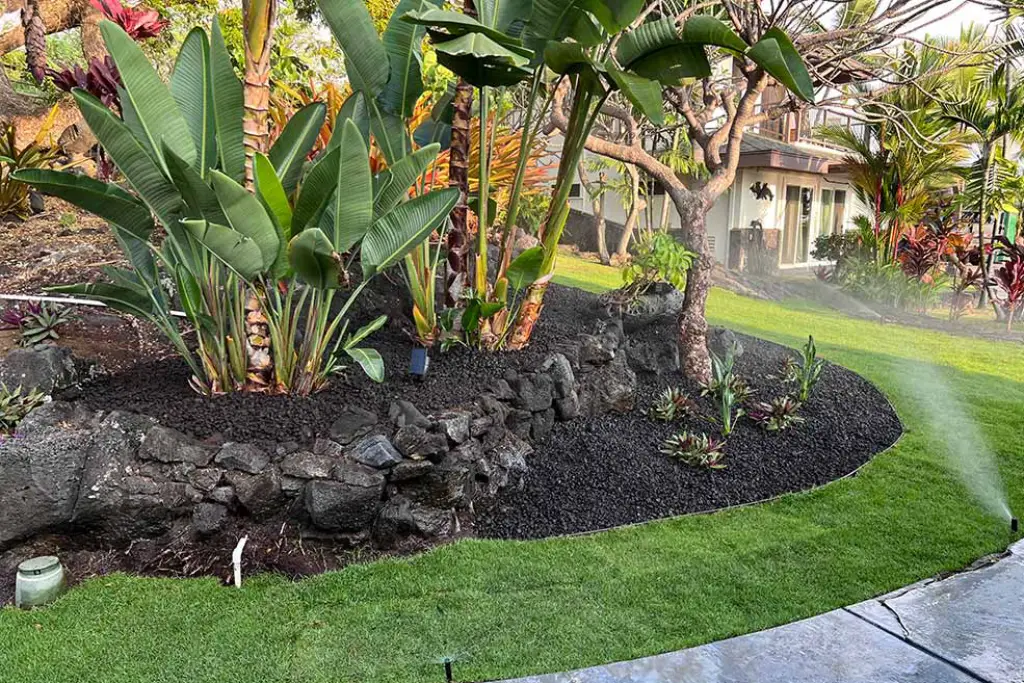
Kailua-Kona landscape that supports local Hawaii pollinators such as Kamehamela butterflies and Hawaiian yellow-faced bees.

Principles of Pollinator-Friendly Landscaping

1. Plant Native and Adapted Species

Native plants thrive local conditions and provide the best food and habitat for native pollinators. On the Big Island, consider planting:

  • Crown flower (Calotropis gigantea) – A favorite of the Kamehamela butterfly
  • ‘Ōhi‘a lehua (Metrosideros polymorpha) – Supports native bees and birds
  • Hibiscus (Hibiscus spp.) – Attracts both bees and butterflies
  • Naupaka (Scaevola spp.) – Provides shelter and food for coastal pollinators

Mixing in adapted, non-invasive flowering plants can further extend the blooming season and provide additional food sources.

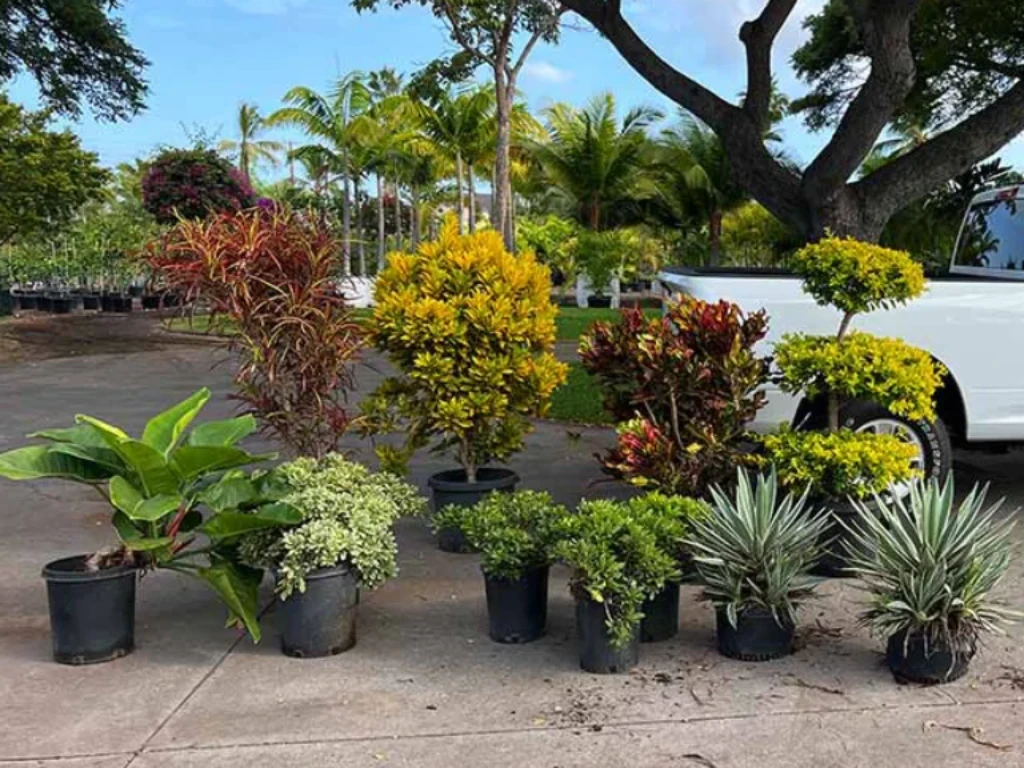
Selection of native Hawaii plant species that help support local pollinator populations on the Big Island.

2. Keep Your Garden Blossoming Year-Round

Plan to have something in bloom every month of the year, which is doable thanks to our tropical climate. The continuity ensures pollinators have a constant supply of nectar and pollen.

A well-planned garden in Kona or Hilo can feature overlapping flowering times with native and tropical ornamentals.

3. Minimize the Use of Chemicals

Avoid synthetic pesticides and herbicides, which can be harmful or fatal to pollinators. Opt for organic fertilizers and natural pest control methods, like introducing beneficial insects (ladybugs, lacewings) and hand-removing pests.

Healthy soil and diverse plantings naturally keep most pest problems to a minimum.

4. Create Habitat Features

Pollinators need more than just food—they need shelter and nesting sites. Consider:

  • Leaving some bare ground for ground-nesting bees
  • Adding logs or dead wood for solitary bees
  • Installing bee hotels
  • Providing shallow water sources (with rocks for safe landing)
  • Allowing some wild, untidy corners in your garden

If your garden is next to your home, do all of the above with an eye on firewise gardening and keep combustible materials like mulch and logs a safe distance away from the structure.

5. Support All Life Stages

Butterflies and moths need host plants for their caterpillars, not just nectar-rich flowers for adults. For example, the crown flower is a larval host for the Kamehamela butterfly.

Research what local pollinators use as host plants and include them in your garden.

Example of a Pollinator Garden for Kona

An example of one of the most beautiful pollinator gardens Hawaii offers might include:

  • A border of hibiscus and native naupaka
  • Clusters of crown flowers for butterflies
  • A patch of native grasses and ‘ōhi‘a lehua
  • Bee hotel installed in a sunny corner
  • Mulched paths with flowering groundcovers
  • Shallow bird bath with river stones

A layout such as the one above provides support in several ways. It provides a layered habitat, seasonal blooms, and a variety of shapes and colors to draw various pollinators.

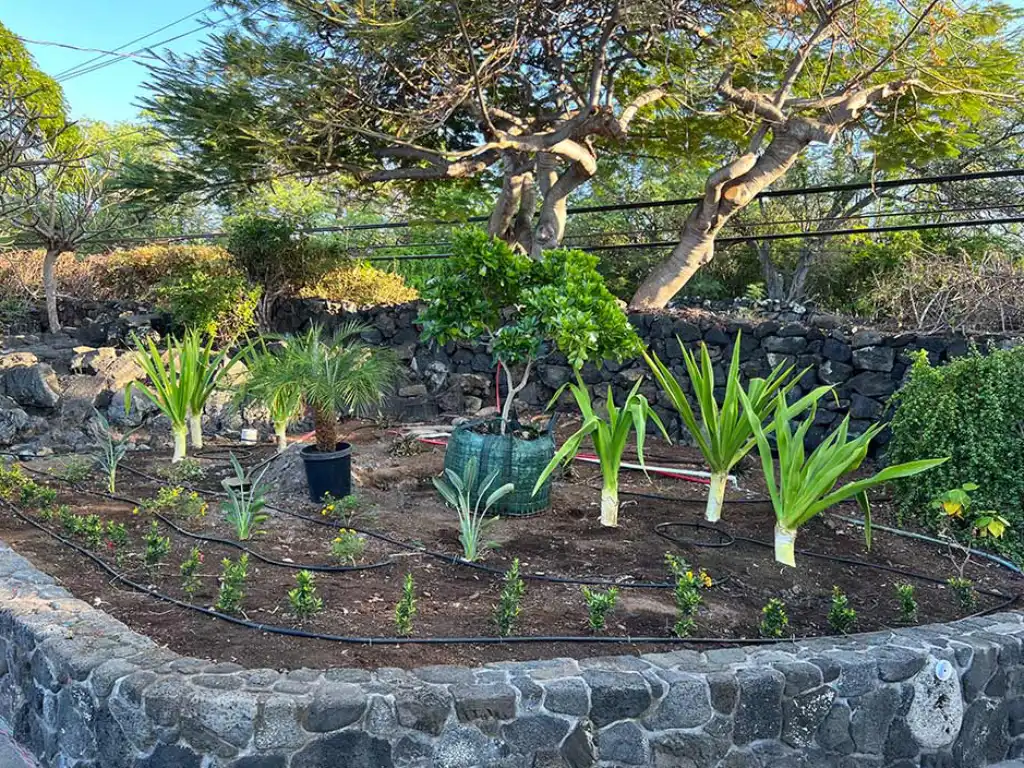
Example of a raised pollinator garden in Kailua-Kona with native Hawaiian plant species.

Use Organic Fertilizers to Protect Pollinators

Synthetic fertilizers disrupt soil microbiology and leave residues that harm pollinators. Use organic options such as:

  • Compost – Adds nutrients and improves soil health
  • Fish emulsion – Provides a gentle, balanced boost
  • Worm castings – Rich in beneficial microbes
  • Mulch – Reduces evaporation and supports soil organisms

Even when using organics, apply fertilizers carefully to avoid runoff into waterways, which may affect native habitats.

The Big Island Picture: Community Benefits

Pollinator-friendly landscaping on Hawaii Island does more than help wildlife. It can also benefit you and the community in other ways:

  • Improve fruit and vegetable yields in home gardens
  • Reduce mosquito populations by encouraging birds and bats
  • Beautify neighborhoods and increase property values
  • Foster ecological care in children and adults

Get Started Planting Your Pollinator-Friendly Garden

Creating a pollinator-friendly landscape is a gift to your garden, your community, and the Big Island’s unique ecology. With informed plant choices and eco-friendly gardening methods, you can invite the birds and the bees—and so much more—into your outdoor space.

Need help with your landscaping in Kailua-Kona? Contact Aina Kona Landscaping at (808) 333-1100 to schedule a consultation. Our services also include organic lawn care.

Frequently Asked Questions

Diverse plantings, healthy soil, and natural pest controls (like birds and beneficial insects) keep most problems in check. Avoid over-fertilizing, which can attract aphids and other pests.

In Hawaii, most plants can be started year-round. Aim for the wet season (late fall to early spring) for easiest establishment, but with irrigation, you can plant almost any time.

Even a few pots of native flowers on a lanai or balcony can provide food sources. Every little bit helps, especially when lots of neighbors join in.

No, honeybees were introduced by humans. While they help pollinate many crops, it’s important to also support native bees and butterflies, which are specially adapted to local plants.

Local landscaping services and nurseries, the Hawaii Island Master Gardener Program from the University of Hawaii (UH) Cooperative Extension Service, and organizations like the Xerces Society offer resources and plant lists. Talk to neighbors and visit public gardens for inspiration.

REQUEST AN ESTIMATE
close slider

    Request an Estimate - or call (808) 333-1100
    We will call you back - usually within one hour!

    GET A QUOTE