Lava vs. Soil: Kona Landscaping’s Special Equipment Needs

Landscaping requires strength and the right equipment, no matter where you are, but here in Kona, the stakes are higher. The Big Island’s black lava flows present a unique group of challenges for homeowners and professionals looking to create lush, beautiful landscapes.

Unlike areas with softer, loamy soil, Kona’s rocky ground means standard gardening tools won’t cut it—literally. Here’s what makes landscaping in Hawaii so different, and why special equipment is a must.

The Harsh Reality of Kona’s Terrain

Kona is located on the leeward side of the Big Island, which makes it famous for stunning sunsets and coffee farms. However, beneath the picturesque surface sits a harsh reality for anyone hoping to dig, plant, or build: the ground is dominated by volcanic rock.

Most properties sit on layers of ʻaʻā and pāhoehoe lava, which are dense, jagged, and often impenetrable without serious power tools.

If you’ve ever tried to push a shovel into the ground, you know the frustration. Instead of sinking into soft earth, you clink against stone, and progress happens in inches rather than feet. Digging even a small hole for a tree or fence post can take hours, making many wonder if it’s worth the effort at all.

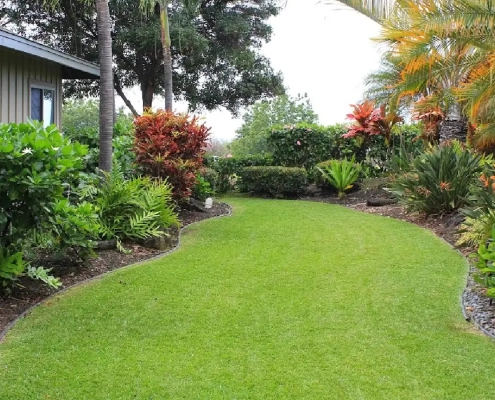
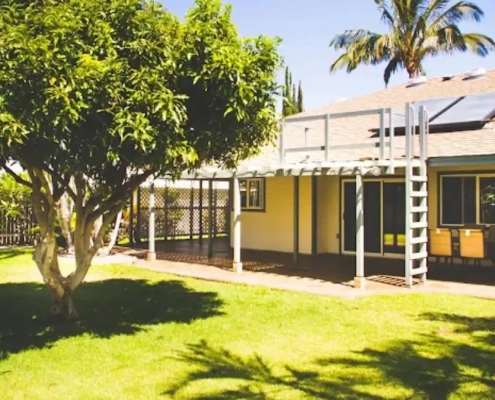
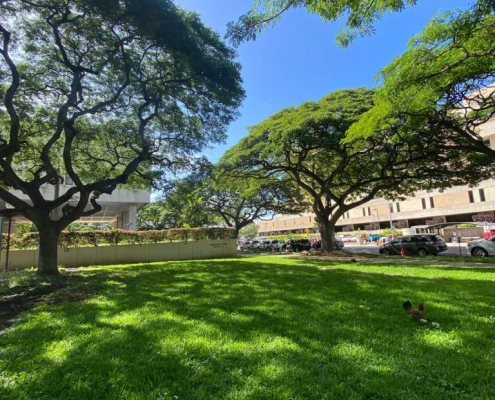
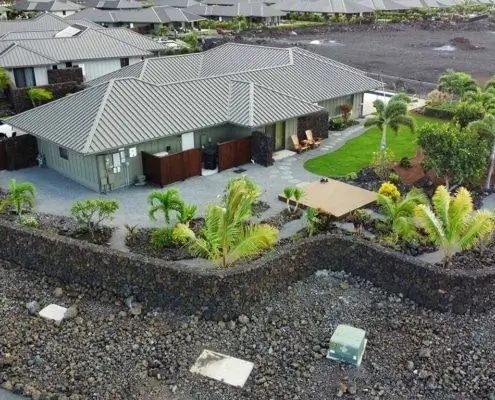
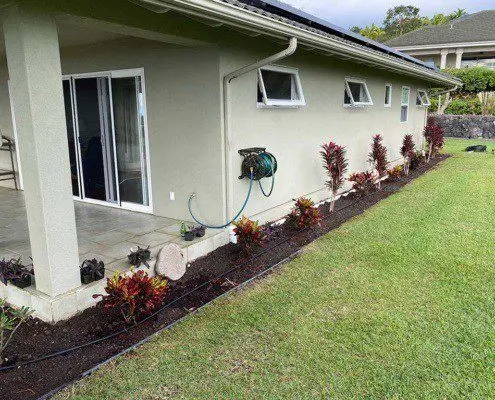
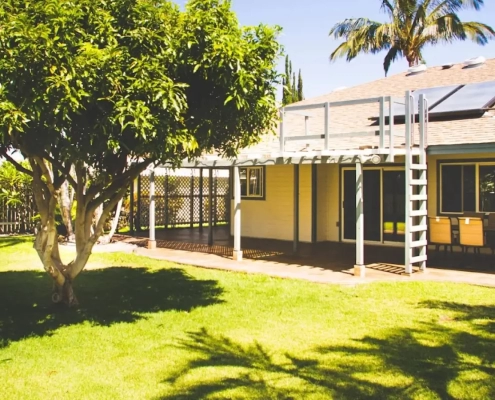
Tropical backyard lawn overlooking the Pacific ocean, demonstrates successful landscaping over rocky Hawaii ground.

Why Standard Tools Don’t Work

Standard shovels, spades, and hand trowels are designed for soil. They rely on the user’s ability to push through soft, pliable ground.

In Kona, regular tools bend, break, or fail to penetrate the lava. Even pickaxes will bounce off the hardest flows. This isn’t just an inconvenience—it’s a barrier to creating the landscapes you plan.

The Necessity of Heavy Equipment

Given the rocky local conditions, professional landscapers in Kona rely on heavy-duty equipment. Backhoes, excavators, jackhammers, and rock saws are common sights on landscaping projects. The machines have the power and durability needed to break through solid rock, making it possible to:

The equipment comes at a cost—not just in terms of rental or purchase price, but also in the skill required to operate it safely. However, without it, many landscaping projects would be impossible or would take far too long to be practical.

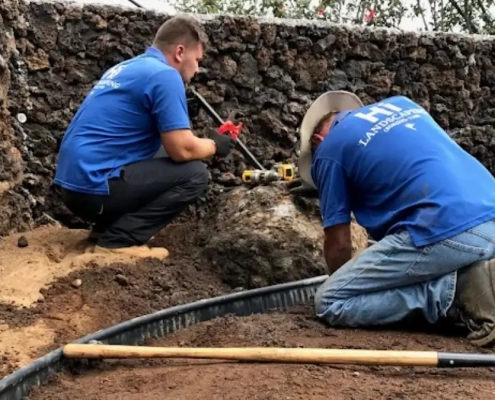
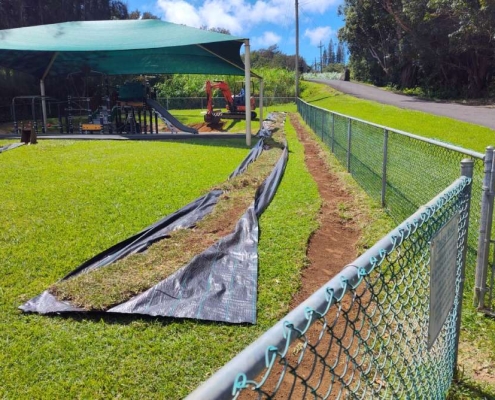
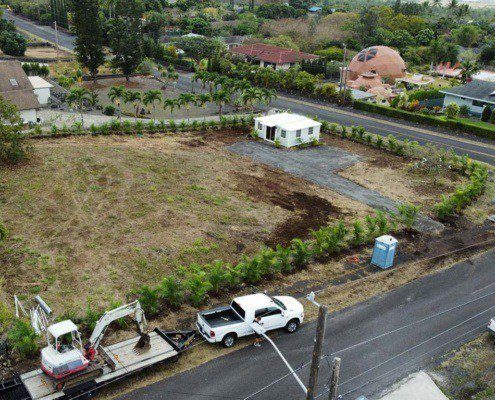
A yellow compact excavator with a jackhammer attachment digs into the dirt beside a lava rock wall, illustrating the need for heavy equipment for big island landscape projects.

Soil Quality and Plant Growth

Another challenge in Kona is the lack of natural soil. Lava rock won’t support most plant growth on its own, so landscapers must import soil, compost, and mulch to create planting beds.

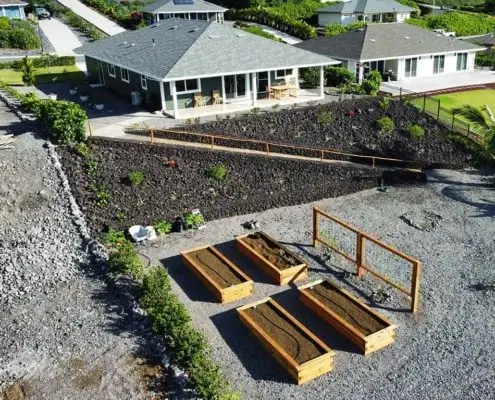
Raised beds are popular because they allow for better control over soil quality and drainage. Still, without breaking up the rock below, even raised beds may struggle to retain moisture during dry spells.

Creative Solutions for Kona Landscapes

Despite the obstacles, creative home and business owners and their landscapers find ways to turn Kona’s tough soil into a host for beautiful gardens. Some strategies include:

Xeriscaping

Using drought-resistant and native Hawaiian plants that will grow in rocky, low-soil environments.

Rock Gardens

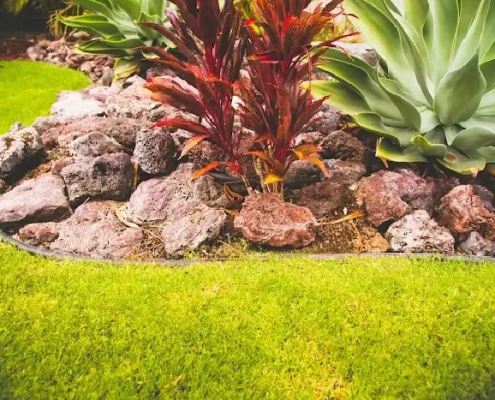
Going all-in with lava rock as a design element, incorporating it into paths, borders, and focal points.

Container Gardening

Growing plants in large pots or containers, sidestepping the surface soil issue entirely.

Terracing

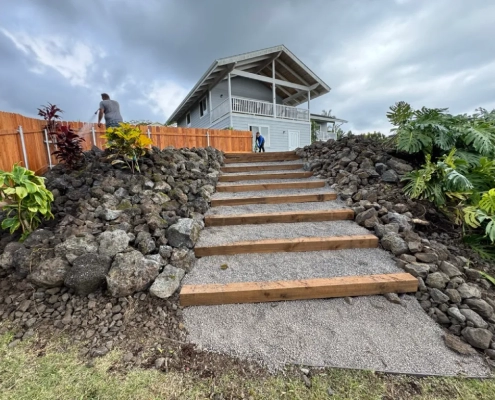
Using heavy equipment to carve out level planting areas on slopes, reducing erosion and making better use of space.

The Environmental Aspects

Importing soil and using heavy machinery can have an environmental impact. It’s important to source soil responsibly and use equipment in a way that protects native ecosystems. Some homeowners also choose to work with the existing landscape, minimizing disturbance and celebrating the local beauty of the lava rock.

Choosing the Right Equipment—and the Right Help

For small jobs, you might be able to get by DIY with a sturdy digging bar and a lot of elbow grease. But for most landscape projects in Kona, professional help is a wise investment. Experienced landscapers have access to the right tools and know how to use them effectively—and safely.

Before hiring a landscaper, ask about their experience with Kona’s terrain. Do they own or have access to heavy equipment? Are they familiar with best practices for importing soil and selecting plants that will thrive? The answers to these questions will help ensure your landscape project is successful from the ground up.

Welcoming the Big Island’s Natural Beauty

While it’s easy to see our Kona lava as an obstacle, it’s also an opportunity. The natural rock formations and rough terrain offer a chance to create landscapes found nowhere else on earth. Employing the right approach—and the right equipment—you can change even the harshest ground into a successful, beautiful space.

With a considered approach and the right resources, Kona’s difficult terrain can be transformed into a garden paradise that’s both green and stunning. Need help with landscaping in Kailua-Kona? Contact Aina Landscaping at (808) 333-1100 to schedule a consultation. Our services include all types of landscape design, installation, and maintenance.

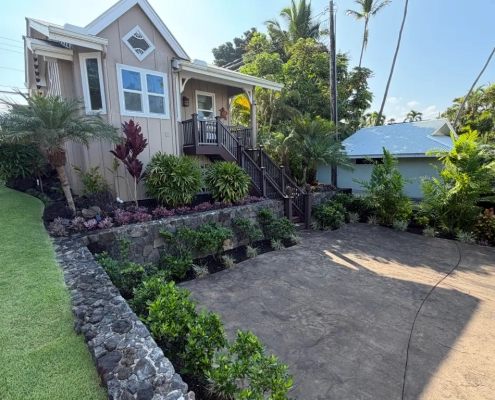
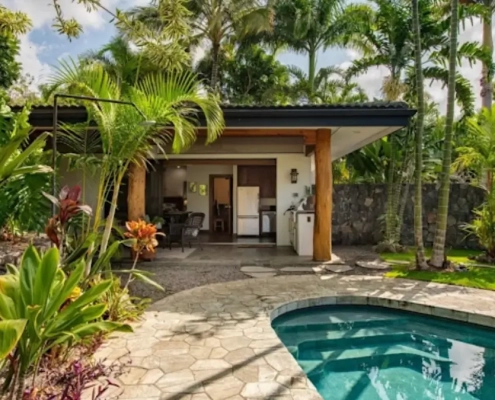
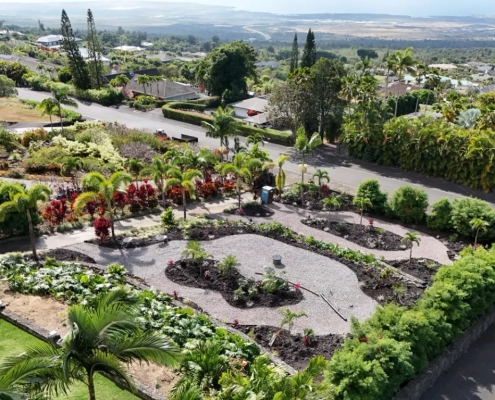
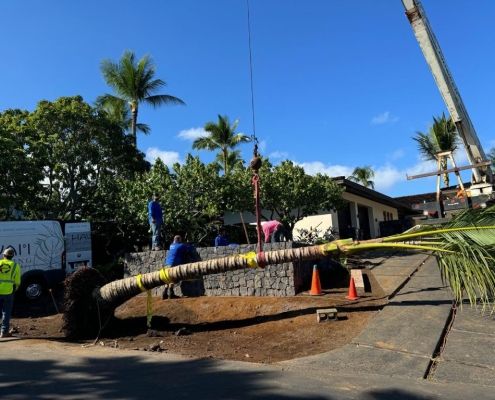
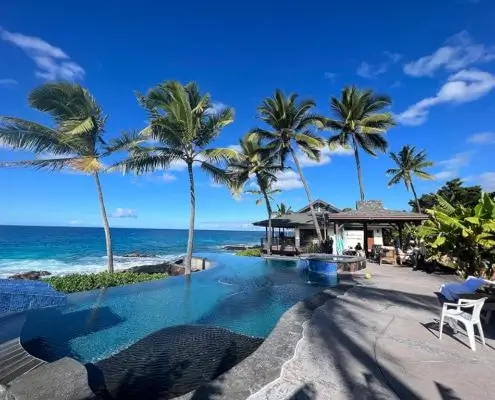
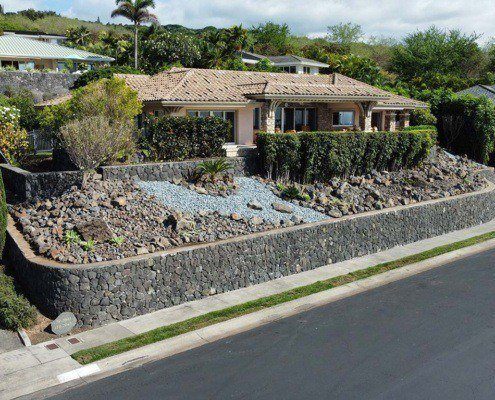
Backyard pool and patio wrapped in native tropical plants and stone walls, displaying a complete Kona lava landscape transformation.

Frequently Asked Questions

For small projects, some people may get by with hand tools and perseverance. However, for anything beyond basic planting, heavy equipment is usually necessary due to the hardness of the lava rock.

Costs are generally higher due to the need for special equipment, imported soil, and skilled labor. However, creative approaches can help keep costs lower, and the results can be beautiful.

Native Hawaiian plants, succulents, and drought-resistant tropical species tend to do best. Many property owners also use imported soil to create beds for fruit trees and vegetables.

Yes, but it often requires importing topsoil and using sod or hardy grass varieties. Irrigation and ongoing soil management are also required due to the rocky subsoil.

Yes. Xeriscaping with native plants, minimizing soil importation, and working with the existing terrain all decrease environmental impact.

REQUEST AN ESTIMATE
close slider

    Request an Estimate - or call (808) 333-1100
    We will call you back - usually within one hour!

    GET A QUOTE