

Copyright 2026. All rights reserved | aina-landscaping.com | Design | Mowing | Irrigation | Fertilize | Trimming & Pruning | Turf Installation | Flowerbeds | Tree Care | Clean-Up | Topsoil & Aggregate | Commercial Services
If you’ve ever watched your sprinkler system working hard—only to notice it’s watering more pavement than grass—you’re not alone. Misaligned, broken, or malfunctioning sprinklers are a common frustration for home and commercial property owners.
Not only does it waste water (and money), but it can also violate the water use rules our Big Island communities maintain or cause uneven lawn or landscaping growth. Fortunately, most sprinkler issues aren’t difficult to fix with a little troubleshooting.
In this complete guide, we’ll walk you through the most common irrigation problems, how to identify them, and what steps you can take to ensure your sprinklers are watering your lawn—not your driveway.
Understanding the Basics: How Sprinkler Systems Work
Most residential and business property sprinkler systems consist of a series of underground pipes that deliver water to pop-up sprinkler heads or drip points. These heads distribute water in a preset pattern—usually adjustable—to cover specific areas of your lawn, garden, or landscaping. The system is typically switched on and off by a timer or smart controller, which automates watering times.
When everything works properly, your lawn and landscaping receive even coverage, and water isn’t wasted. However, a number of issues can throw your system out of alignment, causing water to end up where it shouldn’t.
Common Causes of Sprinkler Misalignment
Misaligned or Rotated Sprinkler Heads
Over time, sprinkler heads can shift due to foot traffic, mowing, routine garden maintenance, or soil movement. A head that’s even slightly out of alignment can spray water onto driveways, sidewalks, or the side of a nearby home or building.
How to Fix:
- With the system running, observe the spray pattern.
- Gently twist the sprinkler head back to its intended position.
- For more resistant heads, turn off the water and use pliers to make adjustments.
Broken or Damaged Sprinkler Heads
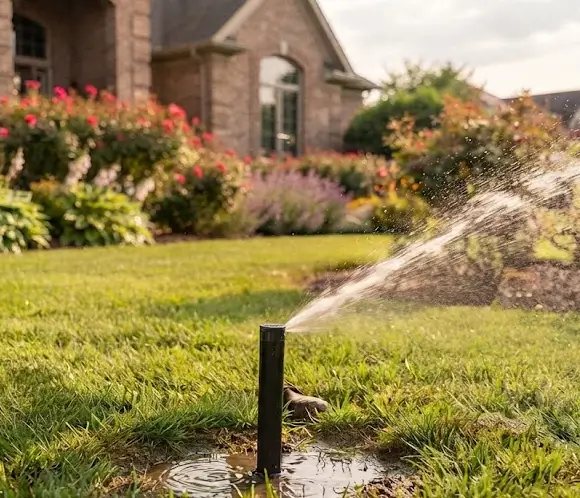
Mowers, gardeners, pets, or harsh weather can crack or shatter sprinkler heads. A broken head or drip point may gush water or spray erratically, missing or overwatering its target area.
How to Fix:
- Turn off the water.
- Unscrew the broken head and replace it with an identical model.
- Make sure the new head is level with the ground.
Clogged Nozzles or Drip Points
Dirt, debris, or mineral deposits can clog sprinkler nozzles and drip points, causing weak, uneven water flow—or none at all.
How to Fix:
- Remove the nozzle and rinse it in clean water.
- Use a small brush or toothpick to clear stubborn debris.
- Reinstall and test for even coverage.
Low Water Pressure
A drop in pressure can cause irrigation systems to underperform or not function at all. This frequently results from underground pipe breaks, partially closed valves, or issues with the main water supply.
How to Fix:
- Look for visible leaks or soggy spots in the lawn.
- Ensure all valves are fully open.
- Consult a professional if the pressure problem continues.
Poor System Design or Layout
Sometimes the issue concerns the existing system design—overlapping spray patterns or heads installed too close to hardscapes can send water where it’s not needed.
How to Fix:
- Adjust spray arcs and distances to avoid overspray.
- Consider relocating heads or installing specialty nozzles for tricky areas.
- Hire an irrigation professional for complex redesigns.
Step-by-Step Troubleshooting Guide
- Do a Visual Inspection: Turn on the system and walk around each zone. Look for water spraying onto concrete, pooling, or missing spots.
- Look for Obstructions: Grass, dirt, or landscaping materials can block heads. Clear any obstructions for maximum efficiency.
- Test and Adjust Each Head: Make minor tweaks to spray direction and arc as needed.
- Replace Malfunctioning Components: Don’t ignore cracked or malfunctioning heads—replace them immediately.
- Monitor Water Pressure: If troubles persist, look for leaks or call a professional.
Preventive Maintenance Tips
- Inspect your sprinkler system at the start and end of each season.
- Clean nozzles, drip points, and filters regularly to prevent clogs.
- Adjust heads after mowing or landscaping work.
When to Call a Professional
While most minor sprinkler problems can be fixed with basic tools and a little patience, some issues—like persistent low pressure, system leaks, or electrical malfunctions—are best handled by an irrigation specialist. If you’re unsure or uncomfortable with DIY repairs, don’t delay seeking professional help.
A well-maintained sprinkler system saves water, promotes healthy lawns and landscaping, and keeps your driveway dry. Regular checks and basic troubleshooting can prevent the most common issues, assuring your irrigation system works efficiently all season long.
Frequently Asked Questions
Why does my irrigation system run even when it’s raining?
Most basic systems don’t have rain sensors. Adding a rain sensor or upgrading to a smart controller can prevent unnecessary watering during rainfall.
How do I know if my sprinkler head is clogged?
Signs include weak spray, erratic patterns, or no water flow. Remove the nozzle and clean it to restore performance.
Can I adjust the spray distance and pattern myself?
Yes. Most heads have adjustment screws or collars. Consult the manufacturer’s instructions or search online for exact adjustments.
My lawn and landscaping have brown patches—could my sprinklers be to blame?
Possibly. Inspect for blocked or misaligned heads, and ensure every area is receiving adequate water.
How often should I check my sprinkler system?
Inspect your system at least twice a year—if your area of the Big Island has a dry season, ideally check things before it begins and halfway through.


