

Copyright 2026. All rights reserved | aina-landscaping.com | Design | Mowing | Irrigation | Fertilize | Trimming & Pruning | Turf Installation | Flowerbeds | Tree Care | Clean-Up | Topsoil & Aggregate | Commercial Services
Mowing Tips, Myths, and Maintenance
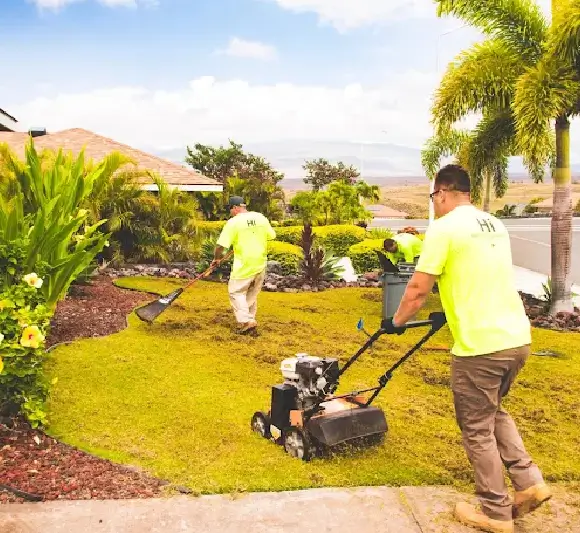
Properly caring for your lawn in Kona and nearby areas on the Big Island of Hawaii can be a challenge. The tropical climate, abundant sunshine, and occasional rain mean that your grass grows quickly, but it also faces stresses that are different from those of lawns on the mainland.
Whether you’re a new homeowner or a veteran gardener, understanding the best summer lawn care practices will help you maintain a healthy, beautiful yard throughout the season.
In this guide, we’ll explore how often you should mow, why mowing height matters, and some expert tips for keeping your lawn lush and resilient—even during the hottest months. We’ll wrap up with a Q&A section answering frequent questions from local homeowners.
#1: Why Summer Lawn Care in Kona Is Unique
Our warm, humid Kona summers mean that grasses such as Bermuda, Zoysia, and St. Augustine thrive. However, these conditions also create challenges:
- Rapid growth: Grass can shoot up seemingly overnight.
- Intense sun: Prolonged sunlight can stress turf and dry out the soil.
- Volcanic soil: Rich in minerals but often fast-draining, which affects watering needs.
- Microclimates: Elevation, along with proximity to the coast, can change your lawn’s needs.
Knowing these variables is the first step to tailoring your summer lawn care routine.
#2: How Often Should You Mow Your Lawn in Summer?
During summer, lawns in our area of the Big Island often require more frequent mowing due to rapid growth. Here’s a general guideline:
- Most lawns need mowing every 5-7 days in peak summer.
- If you have fast-growing varieties like Bermuda, you may need to mow every 4-5 days.
- Slower growers, or shaded lawns, might only need mowing every 7-10 days.
However, don’t just follow a calendar—let your grass tell you when it’s ready. A good rule of thumb is the one-third rule: never remove more than one-third of the grass blade in a single mowing. This decreases stress on the plant and encourages healthy regrowth.
#3: How High Should You Mow?
One of the biggest mistakes homeowners make is mowing grass too short—especially in late summer. Here’s why cutting too low is problematic:
- Grass stores energy in its blades; cutting too short reduces its food supply.
- Short grass exposes soil to more sunlight, causing it to dry out and heat up.
- Shallow cutting burns the roots and can invite weeds and pests.
Pro Tip: Keep your mowing height on the higher side during summer. For most warm-season grasses, a height of 2.5 to 3 inches is ideal. This longer grass shades the soil, keeps roots cooler, and retains moisture more effectively.
#4: Watering and Fertilizing for Summer Success
Mowing is just one piece of the puzzle. In Kona’s climate, effective watering and fertilizing are important:
- Water deeply though infrequently—about 1 inch per week, early in the morning.
- Avoid light, frequent watering, which encourages shallow roots.
- Use a time-release fertilizer in early summer. Don’t over-fertilize, as this can burn grass in hot weather.
- Pay attention to rainfall, as sudden tropical storms can supplement your watering schedule.
#5: Dealing With Lawn Stress and Common Problems
Signs of summer stress include brown spots, thinning grass, or an uptick in weeds. Here’s how to address them:
- Raise your mowing height if you notice browning.
- Leave grass clippings on the lawn as natural mulch.
- Reseed thin areas in early fall, when temperatures cool.
- Aerate compacted soil to improve root growth and nutrient absorption rate.
#6: Three Myths About Summer Lawn Care
There are plenty of misconceptions about caring for your lawn in the tropics. Let’s debunk a few:
- Myth: Shorter grass looks neater and is better for your lawn. Fact: Short mowing can damage roots and dry out your lawn.
- Myth: You should water your lawn every day in the summer. Fact: Deep, infrequent watering is better for root health.
- Myth: Fertilizing mid-summer gives your lawn a boost. Fact: Excess fertilizer in hot weather can burn your grass.
#7: Mowing Equipment Tips
Sharp, clean mower blades make a world of difference. Dull blades tear grass, leading to ragged edges that lose moisture and invite disease. Clean your mower after each use to prevent spreading fungus or weeds.
#8: Sustainable Lawn Care Practices
On the Big Island, it’s important to care for your lawn in environmentally friendly ways:
- Avoid chemical-heavy fertilizers and pesticides that can run off into the ocean.
- Choose native or drought-tolerant grasses where possible.
- Compost your grass clippings and yard waste.
- Consider mulching mowers to recycle nutrients.
Maintaining a Healthy Lawn
A thriving summer lawn in Kona doesn’t happen by accident. By mowing at the right frequency and height, watering wisely, and using nature-friendly practices, you can enjoy a healthy yard all season long. Remember: longer grass is cooler, greener, and more resilient during Big Island of Hawaii’s hottest months.
By using these tips, your Kona lawn will stay green, healthy, and beautiful throughout the summer. Interested in professional mowing and landscaping service in Kailua-Kona? Contact Aina Landscaping at (808) 333-1100. Our services also include landscape design and turf installation.
Frequently Asked Questions
How do I know if I’m mowing too short?
If your lawn looks brown, feels dry, or weeds start to appear, your mowing height may be too low. Raise your mower’s height of cut and see if your lawn improves.
Can I mow when my grass is wet?
It’s easier and better to wait until the grass is dry. Wet mowing can clump clippings, clog your mower, and tear grass blades.
What’s the best time of day to mow?
Early morning or late afternoon is recommended. Avoid mowing during the hottest part of the day to reduce stress on your lawn.
Should I bag or mulch my clippings?
Mulching is usually best, as it returns nutrients to the soil. Only bag if your clippings are excessively long or diseased.
How can I make my lawn more drought-resistant?
Mow higher, water deeply, and choose drought-tolerant grass varieties. Aeration and organic compost also help retain soil moisture.


