

Restoring Paradise: Landscaping Cleanup Tips After Hurricane Lala

Professional Advice from Big Island Landscapers

When Hurricane Lala swept past the Big Island of Hawaii, it left a trail of damage in its wake. Homes and businesses were battered, roads were blocked, and the island’s iconic landscapes—tropical gardens, native forests, and manicured yards—sustained a major hit.

As our community rallies to rebuild, our Aina Landscaping crews are helping with the island’s recovery, lending a hand and their expertise as homeowners and businesses restore their outdoor spaces.

Here’s an in-depth look at post-hurricane landscaping cleanup and restoration in Hawaii, containing insights from our local pros and a Q&A section to address common concerns.

Grasping the Impact: What Lala Did to Our Landscapes

Hurricanes like Lala bring a combination of powerful winds, torrential rain, and flying debris, all of which wreaked havoc on parts of the Big Island’s landscapes. Common post-storm issues include:

  • Uprooted or broken trees
  • Damaged shrubs and groundcover
  • Erosion and loss of topsoil
  • Flooded lawns and gardens
  • Build-up of debris, both organic and man-made

Each of these problems requires a specific approach for effective cleanup and restoration.

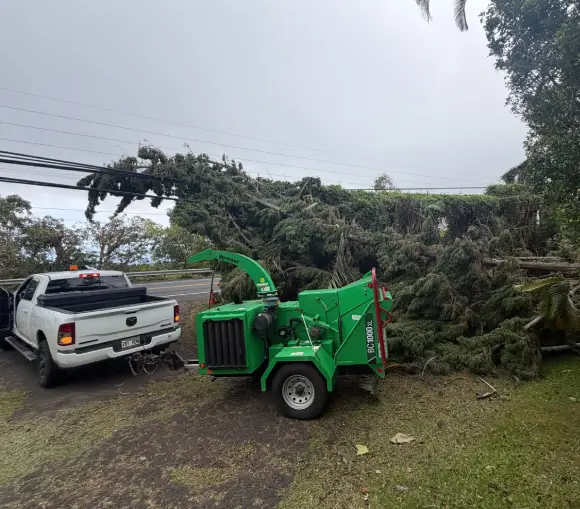
Uprooted roadside tree tangled in power lines with chipping equipment nearby for storm debris removal and landscape cleanup in Kona.

Step One: Assessing the Damage

Before jumping into cleanup, our professionals stress the importance of a full assessment. No matter how urgently things need to be cleaned up, safety must come first. Our landscape contractors remind everyone to watch for downed power lines, unstable trees, or exposed roots before you start any work.

Once you’ve established a safe zone, the next step is to walk the property and note all visible damage. We highly recommend taking photos for insurance purposes and giving priority to hazards such as hanging branches or trees leaning dangerously.

Step Two: Clearing Debris and Making Things Safe

The next phase entails clearing dropped branches, leaves, and any foreign objects that may have blown in during the storm. Our pros advise separating green waste from household debris to facilitate composting or proper disposal. For large trees or heavy limbs, it’s best to hire professional tree removal services that have the proper equipment to safely remove them without causing further damage.

We advise home and business owners against using chainsaws on big trees if you aren’t experienced. Improper techniques are dangerous to you and others, and they can lead to injuries or property damage.

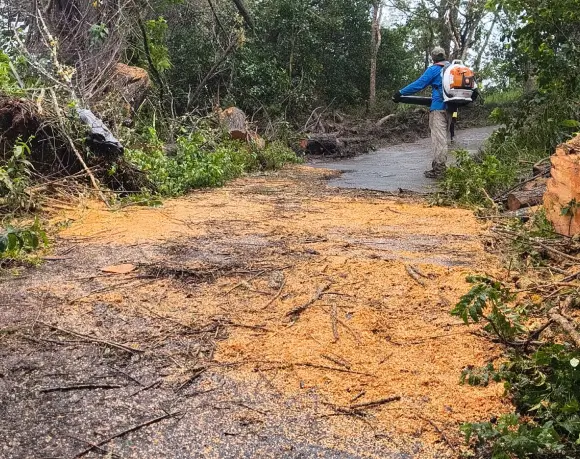
Aina Landscaping crewmember using a backpack blower to clear wood chips and broken branches from a driveway during hurricane debris cleanup on the Big Island

Step Three: Soil and Lawn Recovery

The rich volcanic soil we have on the Big Island is generally resilient, but hurricanes can wash away topsoil and create compaction problems that suffocate plant roots. We recommend the following steps:

  • Aerate compacted soil to improve drainage and root growth.
  • Top-dress with organic matter such as compost to replace lost nutrients.
  • Re-seed or re-sod bare patches of lawn.
  • Monitor for erosion in sloped areas and install temporary barriers if needed.

Step Four: Pruning and Plant Restoration

Damaged trees and shrubs will often recover with the right care. Our Kona landscaping maintenance and restoration specialists suggest removing broken, splintered, or hanging branches, but avoid excessive pruning. Plants need some foliage to absorb the needed sunlight and recover.

For native tropical species, many may have built-in storm recovery capabilities. Plants native to Hawaii are adapted to storms, while imported or invasive species can be more vulnerable – which might be a good thing in the case of unwanted invasive species.

Step Five: Replanting and Long-Term Recovery

Once debris is cleared and soil stabilized, it’s time to think about replanting shrubs, grass, and trees that were too damaged to recover. Our general post-storm replanting recommendations include:

  • Choosing native or wind-resistant plants that can better withstand future storms.
  • Spacing plants appropriately to reduce wind resistance.
  • Installing windbreaks such as hedges or fences in exposed areas.

We also encourage businesses and homeowners to be patient. If you hold off replacing everything at once, some plants may surprise you by growing back in a few months.

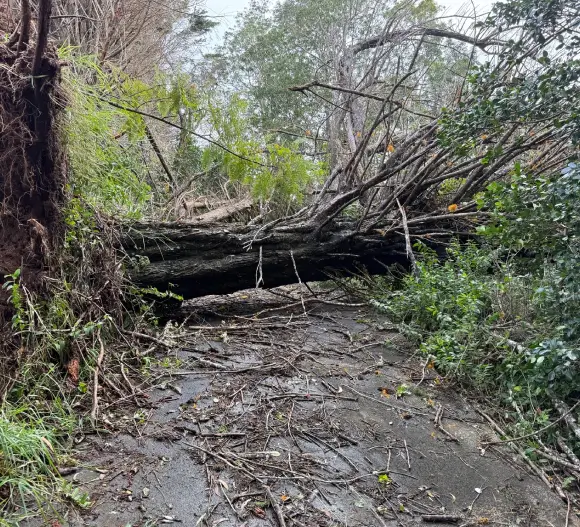
Toppled tree trunk and broken branches covering a driveway, an early stage of post-storm landscape restoration work in Kailua-Kona, HI.

Steps to Prevent Future Damage: Pro Tips

Restoration isn’t just about cleaning up—it’s about creating resilience for the future. Here are some tips from Big Island pros:

  • Regularly prune trees to remove weak limbs and reduce wind resistance.
  • Anchor newly planted trees with stakes until they establish strong roots.
  • Mulch gardens to retain moisture and reduce erosion.
  • Install proper drainage to prevent flooding.
  • Work with local experts who understand the island’s unique climate and flora.

Looking Ahead to More Beautiful Landscapes

After Hurricane Lala, restoring the Big Island’s landscapes is a community effort. With do-it-yourself efforts and help from local pros, businesses and homeowners can bring their gardens, yards, and green spaces back to flourishing life—often tougher and more durable than before.

Need help cleaning up and restoring your lawn and landscaping? We’re an established, locally owned Big Island landscaping company ready to assist. Contact Aina Landscaping in Kona at (808) 333-1100. Our services also include cleanup, planting, and landscape maintenance.

Q&A: Landscaping Cleanup After a Hurricane

Begin only after authorities declare it safe. Prioritize removing hazards and document the damage for insurance before major cleanup.

Small trees can sometimes be straightened and staked, but large trees may need professional assessment. Never attempt to right a dangerously leaning tree on your own.

Separate green waste from other debris. Some communities offer curbside pickup or designated drop-off sites for organic materials after a storm.

Look for signs of compaction, standing water, or dying plants. Aerate and amend soil as needed, and consider soil testing if difficulties persist.

Check with local government offices and disaster recovery agencies. There may be programs to assist homeowners with landscape repairs after major storms.